 Contact us


Checking and analyzing oil by dipstick, it may sound a bit strange to users, but this is a simple, fast and most economical way to test oil.
What do not be parsing to the information through the use of the dipstick. The following article Unioil Lubricants will help you analyze oil quality easily with just an oil dipstick, stay tuned!

1. First – Take an oil sample with a dipstick
- While the engine is hot, stop and turn off the engine.
- Wait a few minutes for the oil to return to the reservoir.
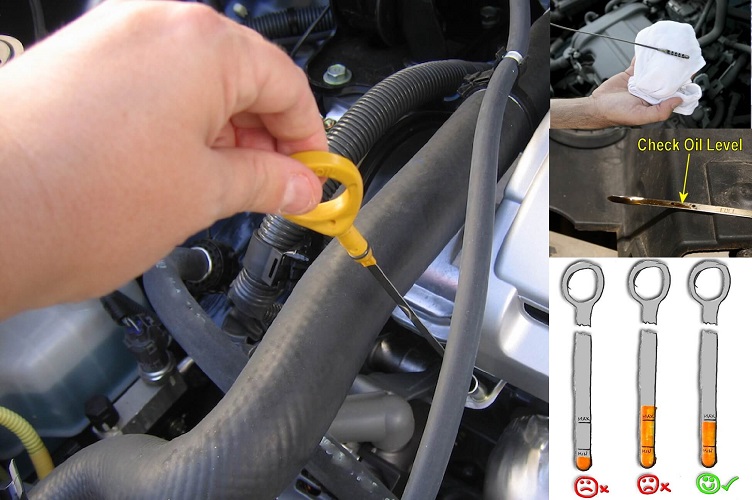
Open the hood and find the oil dipstick on the engine, pull out the dipstick then wipe clean with a thick cloth or paper towel. Put the dipstick back in then pull the dipstick out again.
2. High – low oil level detection
How much oil is enough on the dipstick? Check the oil mark on the dipstick and mark the depth of the oil layer on the dipstick. On the dipstick, there will be a pre-marked standard oil level to achieve.
Look at the top of the dipstick to see where the oil film ends, the end of the dipstick will have the word “ADD – LOW” at the end and “FULL” in the middle.
- If the dipstick does not show the oil level, you need to refill the oil immediately
- If the oil does not reach the marks or holes on the dipstick, you need to add more oil.
- Oil film is below or just below the LOW (ADD) line: you need to add more oil.
- The oil film is located near the FULL line: then you don’t need to add more oil
- Oil film above the FULL line: May be due to excess oil or coolant leak (refer to section 5), need to take to the garage for inspection.

Need to pay attention to the oil film lines to fix it in time
It should be noted that the amount of oil added varies depending on the age of the vehicle, engine type, mileage and driving conditions. In addition, the dipstick is also a measure to help you detect abnormally high oil consumption.
Third – What if the oil level is too high?
In certain cases, the oil level may have increased since you last checked the oil or there is too much oil on the dipstick. This could be due to condensate (from combustion), fuel condensate or a coolant leak – all of which can be causes for concern.
- Fuel Dilution can significantly reduce oil viscosity and additive composition. The smell of diesel fuel can often be detected right from the dipstick.
- Free and emulsified water is very harmful to oil and engine. For short-haul drivers, water condensation can be more serious if your engine has a flexible fuel vehicle option and you’re using a gasoline-alcohol fuel mixture. . It’s important to remember that combustion creates water in your engine – more than the fuel water consumes. Most of the water comes out through the exhaust, but if the engine is cooled, most of the water will condense in the oil reservoir.
- A simple way to detect water in used engine oil is to drip a drop of oil from the dipstick into the hot exhaust. If it crackles (sounds like fried bacon) then this is a sign of water contamination. Be very careful because there is a risk that the droplet may catch fire.
- Leakage of coolant is a serious problem associated with high oil levels (See section 5).
Whatever the cause of the high oil level, the condition needs to be remedied quickly. Note: accidentally pouring too much oil into your engine can also cause problems. As the crankshaft rotates, the oil agitates, causing aeration and possibly retention foam eventually. This can lead to engine oil overheating, oxidation, and loss of oil pressure. Oil with air bubbles is difficult to pump and can damage the engine and important lubricated surfaces.
Fourth – Signs of aging oil need to change new oil
Oil is not like a wine that gets better over time. Instead, it will age at an aging rate influenced by driving conditions, fuel quality, engine age, engine oil quality and climate. If the oil is not changed on time, the oil will degrade and not protect your engine.
So look closely at the oil on the dipstick.
- Good oils should look smooth and glossy and slightly transparent.
- If it has sludge or dirt particles, and if the oil looks too thick, too dark (opaque) or smells of rotten cheese. Then it’s time to change the oil.
If you still don’t know if you need an oil change, consider performing an on-site inspection, which should be checked by a reputable garage.
Oxidized and contaminated oils lose their surface tension. A simple test for surface tension is to place a drop of used oil from the dipstick onto the surface of the water. If drops of oil spread to the surface of the water (instead of beading like new oil), it may be time to change the oil.
Fifth – Signs of a coolant leak
Brown bubbles or solid brown deposits above the oil level line on the dipstick could be an indication that coolant (water and antifreeze) has leaked into your engine. The oil on the dipstick may even look like chocolate milk.
Another prominent sign of a coolant leak is a sweet-smelling white exhaust smoke. In this case, the oil level from the dipstick may actually increase, indicating that a significant amount of coolant has leaked into the oil tank.
To confirm a coolant leak, turn off the engine, let it sit for an hour or two, drain the oil, and use a clear glass or plastic bottle to catch the oil. Because both water and antifreeze are heavier than oil, they will settle at the bottom of the oil bath. Test the liquid for glycol and water. Glycol and water often look like a mayonnaise-like paste, depending on how long the coolant has been in the oil. You may also notice the sweet smell of antifreeze.
If you detect coolant in your engine oil, your engine should be serviced immediately.
* Thus, through the above 5 basic tips, you can check and evaluate the oil quality yourself through the oil dipstick.
Engine oils have many important functions in addition to controlling friction and wear. Oil not only lubricates the engine’s internals, but also helps cool bearings and other frictional surfaces. The oil in the engine, therefore, acts as a radiator to absorb unwanted heat to transfer it by conduction or convection away from the engine.
Under normal driving conditions, running a low oil level may not make much of a difference in bearing temperature or engine lubrication. However, the engine is in dire need of protection in the worst conditions, such as in hot weather, during heavy loads or with a damaged cooling system.
Likewise, when you reduce oil by 25%, the content of important additives is also reduced by 25% – additives that help prolong oil and engine life. In addition, when you are 25% less oiled, the ability to disperse contaminants, acids, soot, scale, sludge and water intrusion is also reduced.
Epilogue:
Thus, through the sharing of Unioil Lubricants, we hope to help readers control the volume and quality of oil in the engine through an extremely simple and quick method – Oil dipstick. From there, it is possible to determine the time to inject or change the oil, ensuring that the engine is always working at full capacity in the best conditions.
If customers have a need to use and learn about lubricating oils, please contact the hotline below for advice and support as soon as possible.