 Contact us


Application of silicone oil in industrial lubrication
Silicone is a special synthetic oil that is widely used in fields such as medical, cosmetic, or industrial lubrication applications. At this post, Unioil We would like to share with our customers the information about the properties of silicone oils and their applications in the field of industrial lubrication to help customers choose the right oil for their machines, in order to bring the best results. most effective and economical.
1. What is silicone oil?
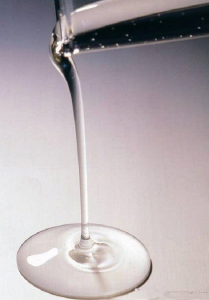
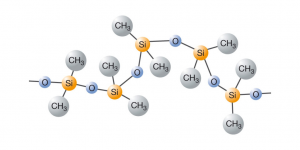
Methyl silicone oil is a linear polysiloxane with silicon oxide silicon as the main chain and two methyl and trimethylsiloxane terminated on the silicon. It is liquid at room temperature.
Methyl silicone oil is generally a colorless, odorless, non-toxic, non-volatile liquid, insoluble in water, methanol, ethylene glycol, benzene, dimethyl ether, carbon tetrachloride or kerosene, and slightly soluble in acetone. , dioxane, ethanol and butanol. Due to the small intermolecular force, molecular helical chain, free rotation of organic group, etc., methyl silicone oil is widely used in daily chemical, machinery, electrical, textile, paint, medicine, etc. food and other industries. It has good dispersing and lubricating ability. Resistance, high and low temperature resistance, weather resistance, radiation resistance. Electrical resistance, high flash point, low surface tension and physiological inertia.
Properties of silicone oil
Properties of methyl silicone oil
Methyl silicone oil has many special properties: such as good heat resistance. Since the main chain of the silicone oil molecule is composed of -Si-O-Si bonds, its structure is similar to that of inorganic polymers, with high bond energies and excellent heat resistance. Good oxidation stability and weather resistance
Good electrical insulation
Silicone oil has good dielectric properties and its electrical properties do not change much with temperature and cycle time. The dielectric constant decreases with increasing temperature, but the change is small. The power factor of silicone oil is relatively low, increasing with temperature, but has nothing to do with frequency. Volumetric resistance decreases with increasing temperature.
Good hydrophobicity
Although the main chain of silicone oil is composed of a polar Si-O bond, the nonpolar alkyl groups on the side chain are arranged outward to prevent water molecules from entering and act as hydrophobic. The surface tension of silicone oil with water is about 42 dane/cm. When the silicone oil diffuses on the glass, due to its impermeability, the contact angle of the silicone oil is about 103°, which is equivalent to the contact angle of paraffin wax.
Low temperature-viscosity coefficient
The viscosity of silicone oils is low and does not change much with temperature, which is related to the helical structure of the silicone oil molecules. Silicone oil is the lubricant with the highest viscosity and temperature among various liquid lubricants. This property of silicone oils is of great significance to dampers.
High compressive resistance
Due to the helical structure of silicone oil, the distance between the molecules is large, and it has a high compressive resistance. Silicone oil with this property can be used as a liquid spring and its volume can be greatly reduced compared to a mechanical spring.
Low Surface Tension
Low surface tension is a characteristic of silicone oils. Low surface tension indicates that silicone oil has high surface activity, so silicone oil has excellent defoaming, defoaming, isolation from other substances and lubricating properties.
Non-toxic, tasteless and physiologically inert
From a physiological point of view, silicone polymers are among the least active compounds known. Simethicone is lazy towards organisms and has no rejection reaction towards animals. So it is widely used in surgery, internal medicine, medicine, food, cosmetics and other fields.
Good lubricating properties
Silicone oil as a lubricant has high flash point, low pour point, good thermal stability, small viscosity change with temperature, non-corrosive metal, no high side effects rubber, plastics, coatings, organic coatings, low surface tension and easily applied to metal surfaces Excellent performance such as diffusion. To improve the lubricity of silicon oil steel to steel, a lubricating additive mixed with silicon oil can be added. The lubricating performance of silicone oils can be greatly improved by introducing a chlorophenyl group or substituting a trifluoropropyl methyl group for a dimethyl group.
2. Application of Silicon oil in the field of lubrication
Application in heat transfer oil
With the characteristics of high flash point (open cup flash above 250° C ), low melting point, oxygen stability, excellent thermochemical stability, good water resistance and low volatility. It is these things that make silicone oils very suitable for applications in heat transfer oils
- Wide operating temperature range: -40 0 C to over 280 0 C even up to some oils up to 400 0 C
- Long service life, reduced maintenance and system maintenance costs
- Safe, non-toxic can be used in heat transfer systems in food and pharmaceutical factories (NSF H1 certified)
However, the disadvantage of silicone oil is that the initial investment cost is higher than when using conventional mineral oil
Applications in hydraulic oil
- Silicon oil has good lubricating properties, a very high viscosity index above 200 helps the oil to work stably in a wide temperature range.
- The ability to separate water is very good
- Good wear resistance, helping to protect the hydraulic system even with copper parts
- Safe, non-toxic, can be used in hydraulic systems in food, pharmaceutical, food packaging plants (NSF H1 certified)
Applications in greases
Silicone grease is a grease using silicone oil, it is usually clear or milky white, large temperature range from -20 0 C to over 200 0 C.
- A traitThe outstanding feature of silicone oil is its compatibility with plastic and rubber materials, which is a property that most mineral oils have limitations. Therefore, to lubricate the rollers, plastic parts or belts, rubber bands, silicone grease is a better choice.
- For electric motors and motorcycles that require grease with good insulation, high stability, and good water resistance, silicone grease is commonly used in crazy engines.
- Another popular application of silicone grease is often used to lubricate machinery in the food and pharmaceutical industries due to its high safety (with NSF H1 certification).
Application of making oil out of molds in presses
- As an agent used to separate two objects that stick together, for example, in the production of plastic, hot plastic is poured into the mold, after the plastic has cooled down, to separate the shaped product from the mold it is necessary to use a special agent. “release” kernel – separates the mold and the template.
- Used in its pure form or mixed with other solutions according to formulation, it is a non-toxic, carbon-free “release” agent for de-moulding of plastics, rubber and other metal enclosures.
In addition, silicone oil is used in chemical and polishing industries. Silicone oil is used to polish cars and furniture because it is easy to use, has high gloss ability, is less prone to scratches, and has the ability to form a good durable water barrier.
Used in electrical and electronic equipment. Since they have good dielectric properties, they are widely used as an insulating and damping fluid.
EPILOGUE:
Through the article Unioil has summarized the properties and applications of silicone oils in the field of industrial machinery lubrication. If you have any questions , you can comment at the bottom of the article or call us directly for answers.
UNILUBRICATION – PREMIUM LUBRICANTS
Hotline: 0938 809 226
Email: info@unilubrication.com
Website: www.uniolubrication.com