 Contact us

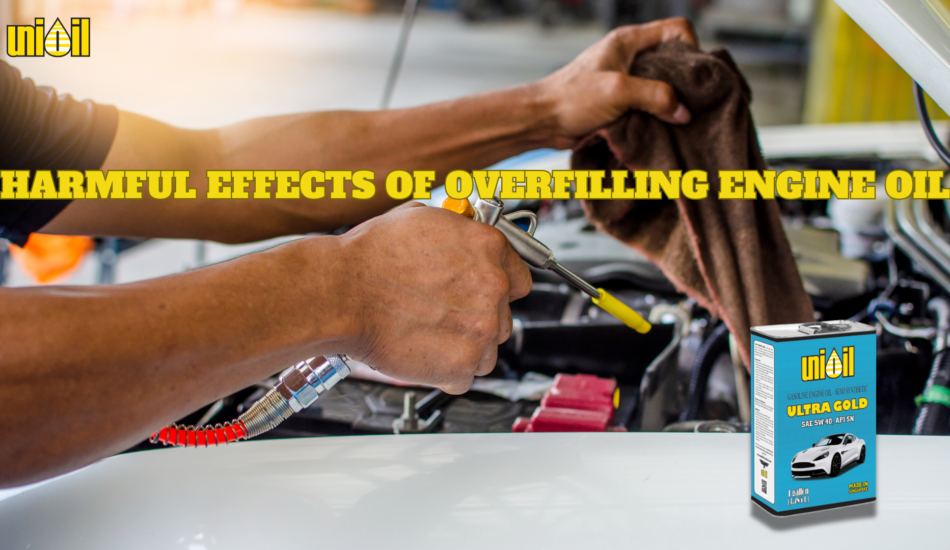
Many people often wonder whether overfilling engine oil has any effects and what the specific harms are. The answer is that engine oil can be underfilled but should never be overfilled. Why is that? Let’s explore this article to understand the consequences of overfilling engine oil and how to handle it.
Unforeseen Consequences of Overfilling Engine Oil
The oil level directly affects the longevity of an automobile engine. Both too little and too much oil can damage the engine, and in severe cases, can lead to breakdowns. Normally, overfilling engine oil will only cause the engine to overheat if the excess is minor. However, significant overfilling can result in serious consequences such as:
1. Oil Foaming
When too much oil is added, the excess oil has nowhere to circulate. As the engine runs and the crankshaft rotates, the excess oil mixes with air, creating foam. Foamy oil cannot lubricate effectively and may fail to circulate properly, leading to overheating and damage to engine components. This can trigger the Check Engine warning light.

2. High Pressure on Engine Components
At the ends of the crankshaft, there are seals that prevent oil from leaking out of the engine. Overfilling increases internal pressure, causing excessive force on these seals, which may lead to oil leakage. Experts warn that oil can also leak onto the flywheel, causing the clutch to slip.
3. Harm to Crankshaft and Connecting Rods
Excess oil forces the crankshaft and connecting rods to face more friction. The high resistance from the oil can cause these parts to bend or even break, leading to engine failure.
4. Damage to Seals and Gaskets
Seals and gaskets are designed to close gaps and enhance connections between parts. Overfilling creates excessive pressure, tearing these seals and causing leaks. This results in a continuous need to replenish oil.
5. Oil in the Combustion Chamber
Too much oil can be pushed into the combustion chamber during engine operation. This causes oil to burn with fuel, producing black smoke from the exhaust. Over time, this clogs the catalytic converter and may break the turbocharger.
Handling Overfilled Oil
- Before Adding Oil: Consult the owner’s manual to determine the correct amount of oil.
- During Oil Addition: Use a dipstick to check the oil level.
- If Overfilled by One Quart: No need for concern.
- If Overfilled by Two Quarts: This is excessive and requires immediate attention.
If you have overfilled, you need to drain the excess oil immediately. Raise the car, get under it, and remove the drain plug at the bottom of the oil pan to let the excess oil flow out. This task is not difficult, just a bit time-consuming.
Recommended quality engine oil
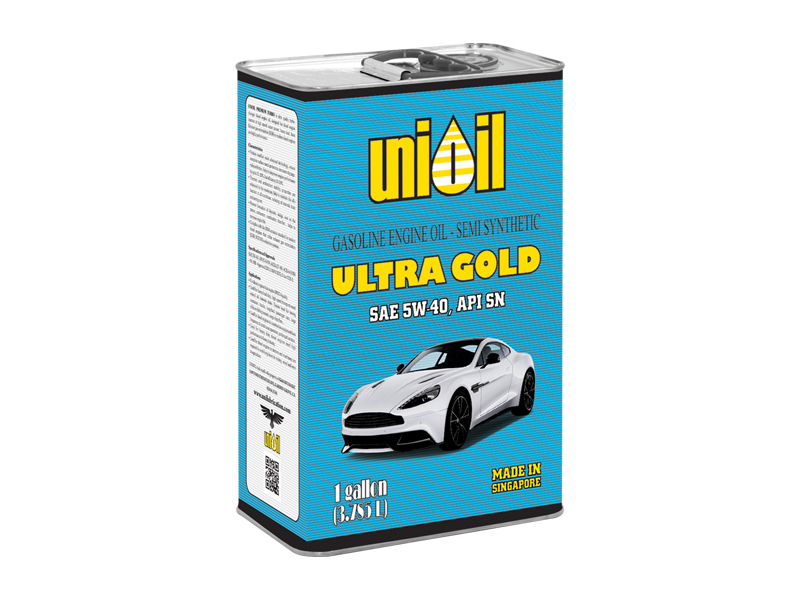
UNIOIL ULTRA GOLD is formulated from 100% synthetic base stock and super quality additives, designed for the most modern car, passenger car, light truck, high performance, high speed, heavy load, fuel economy and new emission standards.
Characteristics
- Using pure synthetic and friction modifier ester –synthetic technology, providing superior lubricating effect over all other synthetic or mineral, increasing engine efficiency up to 25%, simultaneously fuel savings up to 20%.
- Excellent anti-corrosion, anti-wear, prevent formation deposits, ensure tightness help engine work maximum power.
- High mobility, easy to start up under all conditions.
- Excellent thermal stability and resistance oxidation due to the use of synthetic base, long use time double with other mineral base oil, ensure continuous long lubrication and increase engine life.
Conclusion
To maintain effective lubrication in the engine, always ensure that the oil level in your car is between the Min and Max marks. The maximum allowable oil level is at the Max mark; never add more than this. Remember, it’s better to have slightly less oil than too much. This is an unbreakable rule to protect your engine.